
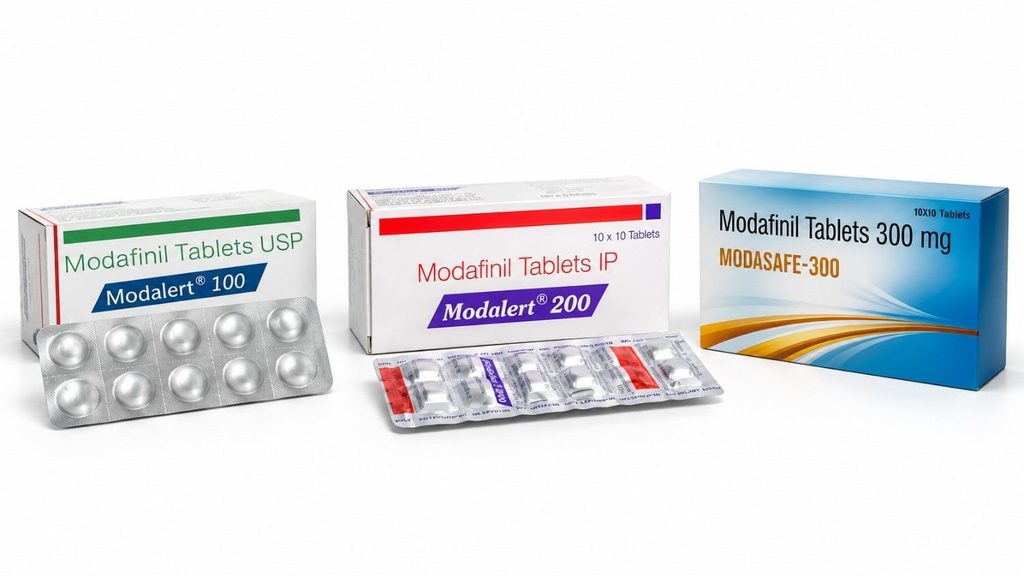
Modafinil comes in tablets of few different strengths, and it is very understandable to ask why and how they differ
That said, this is absolutely not a resource for figuring out your optimal dose. This choice is truly up to your physician considering your exact circumstances and the way you tolerate the therapy. It is just a truthful reason why and a glimpse at the general approach of the doctors about that different strengths.
Why Different Strengths Exist at All
Modafinil has been licensed for narcolepsy, obstructive sleep apnea, and shift work sleep disorder, yet all diseases don’t really need the same level of treatment and neither do all the patients who suffer from these conditions. Some of them get satisfactory control of the symptoms with a small dose only, but some others need more of the substance to deal with their daytime sleepiness properly. The availability of 100mg, 200mg and 400mg packs of modafinil enables physicians to adjust the dose in the treatment to meet the specific needs of patients instead of making every patient take the same one-size-fits-all dose.
100mg: Often a Starting Point
A 100mg dose is usually the starting dose in this situation, especially when a physician is just beginning to observe how a patient responds to Modafinil, or in cases where the patient is particularly reactive to the drug. Lower doses are also prescribed to persons whose conditions are mild and who are only experiencing mild symptoms such that a smaller quantity is sufficient to bring about positive changes without causing any side effects.
200mg: The Most Commonly Prescribed Strength
Modafinil at 200mg is typically the strength most commonly recommended for use, and it is the one with which most studies on narcolepsy, sleep apnoea, and shift work sleep disorder were conducted. A lot of people consider this strength as a good compromise: on one hand it will help you stay awake and, on the other hand, your risk of any negative side effects will not increase significantly.
400mg: A Higher-Strength Option
However,the situation can arise when patients are already at the lowest possible doses of such medicines and they do not achieve satisfactory treatment effects after some time. Sometimes patients report feeling no difference at the lower doses whereas after the higher dose they feel their symptoms are controlled much better.
But of course, higher doses generally come with more side effects so it is only in situations where a doctor thinks the potential benefit of a higher dose is worth the risk of more side effects that a 400 mg tablet will actually be used.
How Doctors Actually Decide
Dose isn’t picked by guesswork or preference a few factors typically guide the decision:
Diagnosis and severity. Someone with more pronounced excessive daytime sleepiness may need a different starting point than someone with milder symptoms.
Response to treatment. Doctors often start at a lower dose and assess how well it’s working before considering an increase, rather than starting at the highest strength by default.
Side effects experienced. If side effects appear at a given dose, that affects whether to stay, reduce, or adjust rather than increase.
Other health conditions and medications. Liver function, heart health, and other medicines someone is taking can all influence what dose is appropriate.
The specific condition being treated. Shift work sleep disorder, narcolepsy, and sleep apnoea-related sleepiness don’t always call for identical dosing approaches.
Why Self-Adjusting Isn’t a Good Idea
At some superficial level it would feel reasonable to think that “if 100 mg gives some benefit, double that amount will definitely provide much more”. However, you shouldn’t increase the dose on the basis of a very minor change in the condition you are in on that specific day.
Modafinil is a drug that has a long half-life meaning that it takes multiple hours to be fully cleared from your system, and therefore it should be remembered that not only taking more of it than prescribed leads to a significantly increased probability of side effects but may also seriously disrupt sleep which in turn can have a detrimental effect on the effectiveness of the treatment.
The proper response in the event that the dose prescribed isn’t adequately alleviating the problem or the occurrence of side effects is the consultation with a medical expert rather than an individual change of a regimen. Your physician can consider various aspects that are directly related to your case before concluding whether adjusting dosage, the time when you are taking the drug, or altogether changing medication is needed.
Splitting Tablets
Some people are prescribed a dose that involves splitting a tablet for example, half of a 200mg tablet rather than a full 100mg one. Whether this is appropriate depends on the specific tablet’s formulation, and it’s something to confirm with your doctor or pharmacist rather than assume is fine for any tablet.
Timing Matters as Much as Dose
Regardless of strength, when you take Modafinil matters almost as much as how much you take. For narcolepsy or sleep apnoea, it’s typically taken in the morning. For shift work sleep disorder, it’s usually taken before a shift begins. Taking any dose too late in the day risks interfering with your next sleep period, which can undercut the whole point of treatment.
The Bottom Line
100mg, 200mg, and 400mg exist because Modafinil needs to suit a range of conditions, severities, and individual responses not because higher is simply better. The right dose is the one your doctor has determined fits your specific diagnosis and how you respond to treatment, reviewed over time rather than set once and left unquestioned. If you have concerns about your current dose, that conversation belongs with your doctor, not a personal experiment. You can browse the full range of strengths and options on our site.
This article is general information only and isn’t medical advice. Always take Modafinil exactly as prescribed, and speak with your doctor before considering any change to your dose.