
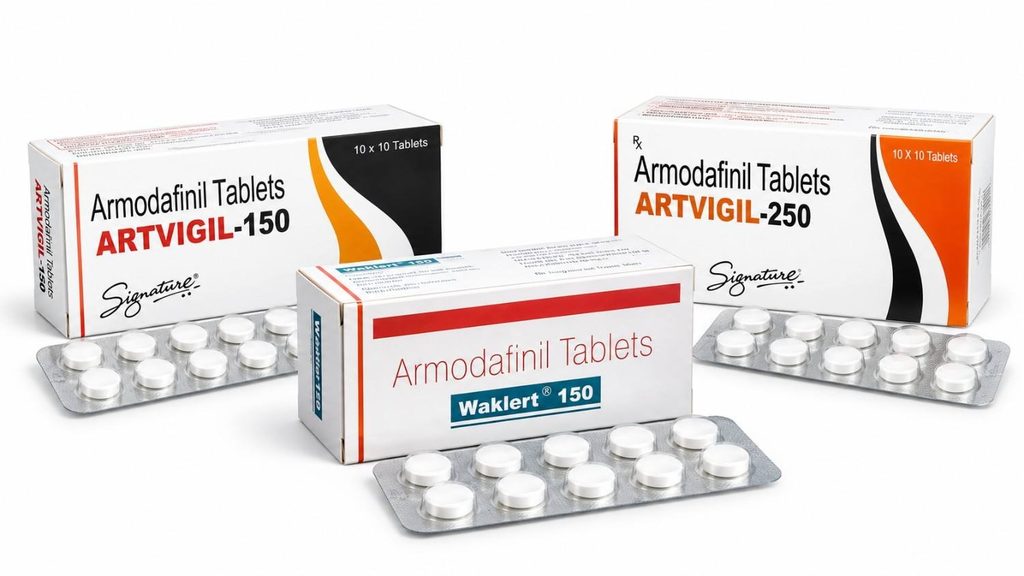
Armodafinil is mostly not given any reactions when you only use it. However you do need to consider that, just like any other medication, it doesn’t exist all by itself either.
Liver enzymes process Armodafinil and so do the enzymes used by other common medicines this interdependency might explain why and how the use of Armodafinil alters some effects of other medicines and how they could be altered themselves in turn. We present here the most relevant information about drug interactions based on actual experiences. If you’ve been prescribed one of the Australian armodafinil brands, these checks apply to you directly.
Why Interactions Happen in the First Place
Armodafinil is metabolized partially through a pathway involving the enzyme CYP3A4. Moreover, it also influences certain liver enzymes such as CYP2C19. These pathways are also used by a very large number of other drugs; therefore, armodafinil can affect the time required by your body to eliminate these drugs. This, in turn, could lead to the other medicine to reach a lower level than expected or a level of the drug that is actually too high due to the body’s reaction to the drug.
Either way it happens, you definitely don’t want to realize it after the fact.
Hormonal Contraception
This is one of the most clinically important interactions, and it’s often under-discussed. Armodafinil can reduce the effectiveness of hormonal contraceptives, including the combined pill, the mini pill, implants, and some other hormonal methods. This isn’t a minor footnote, it’s a real risk of unintended pregnancy if it’s missed. If you’re taking or starting hormonal contraception, this needs to be flagged to your doctor, who can advise on additional or alternative contraceptive precautions, often recommended for the duration of treatment and for a period after stopping.
Other Medicines Processed by the Same Liver Enzymes
Because armodafinil affects CYP3A4 and CYP2C19, it can interact with a range of other medicines that rely on these pathways, including:
- Certain calcium channel blockers and some other heart or blood pressure medicines
- Some cholesterol-lowering medicines (statins)
- Certain anti-seizure medicines, such as phenytoin
- Some antidepressants, including certain SSRIs
- Cyclosporine, an immunosuppressant used after organ transplants or for some autoimmune conditions
- Warfarin, an anticoagulant, where levels may need closer monitoring
This isn’t a complete list, and the specific risk depends on the exact medicine and dose involved. The safest approach is simply telling your doctor and pharmacist about every medicine and supplement you take, prescription or otherwise, so they can check for anything relevant to your situation.
Other Stimulants and Wakefulness-Promoting Medicines
Mixing armodafinil with other stimulant drugs such as prescription medications for ADHD and other wakefulness-promoting drugs should not be considered unless you are under the guidance of a physician, for example. The combined action of stimulants can actually elevate the incidence of anxiety, raise heart rate, induce blood pressure changes, and so on without necessarily improving the condition for which the medicine is taken.
Alcohol
Drug interactions: Armodafinil and how alcohol interacts with this drug class. Both, the effects of alcohol on judgment, coordination and sleep and those of armodafinil for treating a diagnosed sleep disorder may be affected. Combining armodafinil and alcohol would likely make it more difficult for you to assess how impaired you are because the wakefulness effect of armodafinil may partially cover some of the sedative effects of alcohol.
This, however, does not imply that an occasional small amount of alcohol is necessarily the reason for someone not to take armodafinil. If anything, these findings underline the reason one should at least discuss it with one’s doctor and, for example, stay away from driving or working with a dangerous machine while under the effect of the medication and alcohol combined.
MAOIs and Certain Other Psychiatric Medicines
Monoamine oxidase inhibitors (MAOIs), an older class of antidepressant, can interact significantly with medicines that affect brain chemicals related to alertness. If you’re taking an MAOI or have taken one recently, this is something to flag clearly to your prescriber before starting armodafinil.
Existing Health Conditions That Affect Interaction Risk
Certain health conditions change how relevant some of these interactions are:
- Liver conditions affect how armodafinil itself is processed, which can change dosing considerations.
- Heart conditions, including arrhythmias or uncontrolled high blood pressure, raise the stakes around any interaction that affects heart rate or blood pressure.
- A history of anxiety or psychiatric conditions is relevant where other medicines affecting mood or alertness are involved.
This is exactly why a proper medical history matters before starting armodafinil, not just a list of current medicines.
What to Actually Do About This
Here are some small but effective habits that can help avoid missing potentially harmful combinations:
- Record all the medications that you are currently taking on a list and make sure to update it when you try a new medication or product. Do not forget to check on the non-prescription medicines, dietary and herbal products too. It is a great idea to discuss the medications with your doctor and pharmacist to make sure there is no harmful mix.
- Tell your doctor or other health professional that you are on armodafinil medication every time you get a new prescription. Although the prescriber could not think you are taking it automatically, it is wise to mention it. This way, any possible interaction is ruled out.
- The idea that “just because it’s not a prescription medicine it must be safe” is wrong; certain supplements do, in fact, cause drug interactions. One such supplement is St John’s Wort. You should be careful of its interaction with medications that are metabolized via the liver enzyme pathway.
- Speak up when you feel something is wrong instead of letting it get worse silently, especially if your new/second drug brings in new or gets even worse side effects.
The Bottom Line
Armodafinil’s interactions mostly come down to one thing: it shares liver enzyme pathways with a lot of other medicines, and it has a specific, clinically important effect on hormonal contraceptive reliability. None of this makes it an unusually risky medicine, but it does mean your full medical and medication history matters before starting it, and staying in the loop with your doctor and pharmacist matters while you’re on it.
This article is general information only and isn’t medical advice. Always tell your doctor and pharmacist about all medicines, supplements, and health conditions before starting armodafinil, and raise any new symptoms with them promptly.