
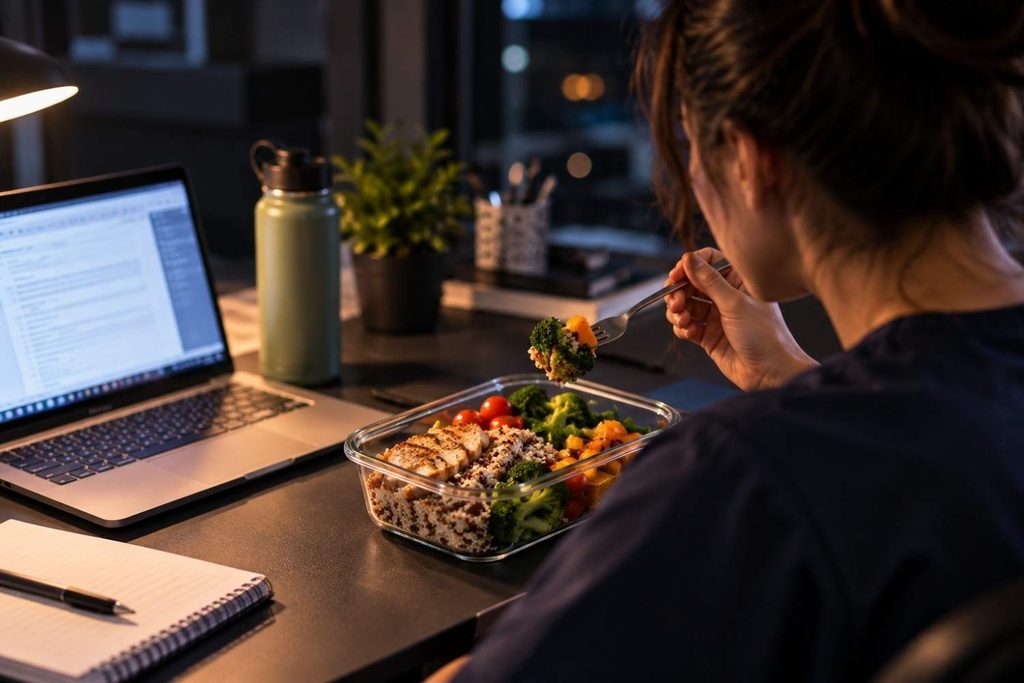
It’s 3 a.m. you’re tired, the break room is silent, and the vending machine is whispering your name. If you get up at night to work, you know how easy it can be to reach for whatever is close, which is quite often a sugary or salty treat.
Fortunately, just a couple of healthy habits can be the change that you make to you being full of energy, having your digestion going well, and feeling well when you come home.
This is a practical guide that tells you what to eat during the night shift, the kinds of food and the times you should eat.
Why Eating on Night Shift Is Different
Your body is designed to process food best during the day.
That’s because your body clock at night assumes you are asleep, and in that situation digestion goes into slow mode and your body processes sugar and fat in different ways.
What’s more, such research is supported. In a project carried out by University of South Australia, University of Adelaide, and SAHMRI a group of young healthy adults stayed up for 4 nights. It turned out that blood sugar control of those who consumed a meal or a snack at night was worse as compared to those who did not eat at night. Therefore, it could be a strategy that will help protect long-term health, according to the researchers, to avoid large meals at night and to eat mostly in the daytime.
On the other hand, it is also good to not forget that the study described was a small and temporary one conducted on healthy individuals and a lot of workers need to feed themselves for comfort and alertness at different times. So the main thing isn’t “never eat at night,” the main things are “make your biggest meal earlier in the day, and keep what you eat at night to being smaller and smarter.”
The Basic Pattern
Most dietitians and workplace health guides suggest something like this:
1. A proper meal before your shift. This is your “dinner”. Eat it 1 to 2 hours before you start, with protein, wholegrain carbs and vegetables.
2. Small snacks during the shift. If you need to eat, keep it light and protein-rich, roughly every 3 to 4 hours.
3. A small meal after your shift. Something light to stop hunger waking you up, without being heavy enough to disrupt sleep.
4. Avoid big meals in the dead of night. The hours between about midnight and 6am are the hardest on digestion, so keep food small then.
Sample Plan for a 10-Hour Night Shift (10pm to 8am)
Everyone’s body and roster are different, so treat this as a starting point.
- 6 to 7pm: main meal. For example, grilled chicken, brown rice and vegetables, or a lentil and veggie curry.
- Around 11pm to midnight: small snack. A handful of nuts, a piece of fruit, or yoghurt.
- Around 2 to 3am: light, protein-rich snack if hungry. A boiled egg, cheese and wholegrain crackers, or a small tub of cottage cheese.
- Around 6am: light meal after work. Something like toast with peanut butter, a banana and yoghurt, or a small bowl of porridge.
What to Eat: Smart Food Choices
Protein. Eggs, yoghurt, cheese, nuts, hummus, tuna, or lean meats. Protein helps you feel full and keeps your energy steadier.
Wholegrains and fibre. Wholegrain bread, oats, brown rice, and fruit. These release energy more slowly than refined carbs.
Fruit and vegetables. Cut-up veggies with hummus, a piece of fruit, or a small salad are easy and light.
Water. Aim to sip water regularly through your shift. Mild dehydration can make you feel more tired.
What to Limit
Sugary snacks and drinks. Lollies, biscuits and energy drinks can give a quick boost and then a crash, which leaves you feeling worse.
Big, greasy meals. Takeaway burgers, hot chips and pizza are heavy and can leave you feeling sluggish and uncomfortable.
Too much caffeine. A coffee or two early in your shift is fine for most people. Late caffeine can ruin your sleep afterwards, so try to stop about 6 hours before you plan to go to bed.
Alcohol after work. It might help you drift off, but it usually makes sleep lighter and more broken.
Planning Ahead Makes It Easy
- The real trick is getting everything ready. It is very tempting to reach for the easy option when we are tired, so it’s a good idea to make healthy food easy and accessible.
- Take advantage of your free day to batch cook. You can do this easily by portioning each meal in a separate lunch container.
- Before leaving the house, take a minute to get your food bag together with your main meal, two snacks, and a water bottle.
- Stocking the non-spoiling ones (e. g. nuts, wholegrain crackers and tuna) at the workplace is not a bad idea.
- If you keep your bag well insulated together with an ice pack, the food will stay fresh much longer.
- Snack box with fresh fruits and vegetables, a slice of cheese, that’s all you need, no thinking.
Easy Night Shift Food Ideas
- Lettuce wraps using wholegrain tortilla, chicken and hummus
- Veggie omelette and a piece of wholegrain toast
- Dry overnight oats with fresh berries and chopped walnuts
- Cans of soup for lunch to go with a whole grain roll
- Groovy Greek yogurt with mixed berries and some pumpkin seeds
- Rice paper rolls or a mini veggie stir-fry both high on greens
Handling Hunger and Cravings
Different people have their own experience, but in most cases, hunger and sweet tooth in the night are just symptoms of a biological misalignment of the internal clock, on one hand, and hunger signals, on the other. To deal with it, you can try:
- Get water, plain or herbal, on the table. It’s often possible to confuse thirst with hunger.
- Instead of a sugar rush you’ll reach for, have a snack high in protein. Just to be ready, I.e. a piece of cheese.
- If possible, get together with a colleague in an informal place, away from your desk.
- To prevent hunger pains and cravings getting out of control, you should not skip the meal completely, either.
If You Have a Health Condition
Everyone’s requirements are not the same.
So, if you are a diabetic patient, or on long-term medication, or a pregnant woman, or have digestion-related illness, you should not be changing your meal plan by yourself.
Timing food is a factor in controlling blood sugar and certain drugs, therefore it would be wise for you to get advice from your doctor, pharmacist, or an accredited practicing dietitian someone who can give you a plan that exactly suits your needs
The Bottom Line
You don’t need a perfect diet to handle night shifts. The most important thing is to stay nourished during those hours, eat well before you turn in, don’t rely on caffeine and sugar only, pack some snacks to avoid overeating later, and go to bed with a light dinner. Some basic meal planning and a food bag that you prepare in advance will definitely help you feel more refreshed, will not interfere with your rest, and will take care of your overall wellness.
This article is general information only and isn’t medical or dietary advice. For personal advice, speak with your GP or an accredited practising dietitian.