
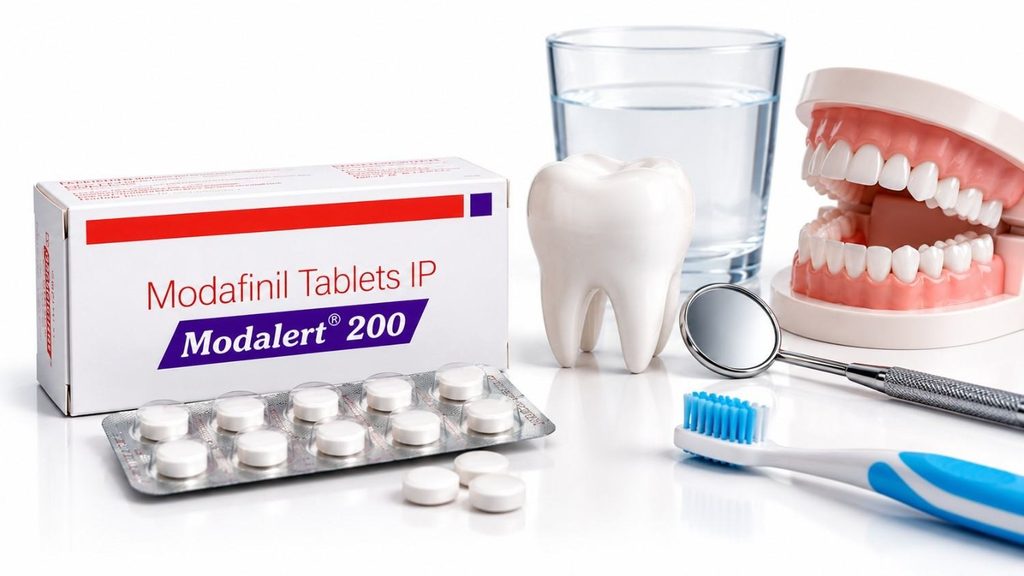
If you began taking Modafinil and now your mouth is feeling dryer than usual besides that after waking up you have a sore jaw, then it seems like something has gone on. However, it is not just you but many users get affected by such side effects of drying mouth and jaw aches. This topic is commonly raised and there are few facts and some opinions that we share with you in this article.
The Well-Established Part: Dry Mouth
Dry mouth is indeed a documented, acknowledged side effect of Modafinil, and it is featured in the product leaflet together with other common reactions such as headache and nausea. This is due to the fact that Modafinil works on the nervous system and can thereby diminish the secretion of saliva.
You may not be aware of the fact that this is even more significant for your teeth than you think. Saliva plays a role not only in the general well-being of your mouth, but also in cleaning food particles and, to a lesser extent, in balancing bacterial activity by neutralising acids thereby protecting against tooth decay. On a long-term note, if the saliva levels in your mouth decrease due to any reason, you would likely experience more cavities, gum irritation, and bad breath.
The Less Clear-Cut Part: Teeth Grinding (Bruxism)
This is where things get murkier, and it’s worth being honest about the actual evidence rather than overstating it. Teeth grinding or jaw clenching known as bruxism isn’t officially listed as a Modafinil side effect in clinical trial data or product information. That said, some people do report it, and there’s a plausible explanation for why: Modafinil affects dopamine activity in the brain, and other medications that affect dopamine have been linked to bruxism in some cases. Stronger stimulant medications, like amphetamines, do have a more established link to teeth grinding.
So where does that leave Modafinil specifically? The honest answer is: a biologically plausible but not strongly proven connection, based mostly on individual reports rather than large clinical studies. If you’ve started grinding your teeth or clenching your jaw since starting Modafinil, it’s reasonable to consider it as a possible factor, without assuming it’s definitely the cause of stress, anxiety, sleep quality, and other factors that can cause bruxism too, with or without medication involved.
Signs Worth Paying Attention To
A few things suggest bruxism might be happening, especially if you’re not aware of grinding while you sleep:
- Jaw soreness or tightness, particularly in the morning
- Headaches that seem concentrated around your temples
- Increased tooth sensitivity
- A partner mentioning they’ve heard grinding sounds at night
- Visible wear on your teeth, which a dentist can usually spot
What Actually Helps
For dry mouth:
- Drink water regularly through the day, not just when you remember to
- Consider sugar-free gum or lozenges, which stimulate saliva production
- Avoid excessive caffeine and alcohol, both of which can make dry mouth worse
- Use a humidifier at night if you tend to wake up with a particularly dry mouth
For possible teeth grinding:
- Mention it to your dentist, who can check for wear and discuss whether a night guard makes sense for you
- Practice basic jaw relaxation, consciously unclenching through the day if you notice tension building
- Look at your broader stress and sleep picture, since both are common bruxism triggers independent of medication
- Avoid other stimulants, including excess caffeine, which can compound jaw tension
Keeping Up With Dental Basics
Regardless of the potential effect of Modafinil, it is the daily routine that will be most effective while taking it, e.g., brushing twice with fluoride toothpaste, flossing, and maintaining regular visits to the dentist. If your mouth is dry for the time, the dentist probably will also recommend a particular mouthwash or product meant for dry mouth.
When to Talk to Your Doctor
Managing the symptoms like dry mouth is one thing and ignoring the teeth grinding problem is another. Hence, even though it may seem manageable for the time being, you should still raise it with your doctor about whether such issues could still be part of side effects from your Modafinil or at least be the case for some other reason. Doctors can check if it’s most probably due to Modafinil and the dosage, or if there’s another problem you may need attention for. Doctors can also explain if it’s reasonable to make changes. It’s not the kind of decision one should make alone. If dry mouth or jaw tension is affecting your day-to-day, it’s worth discussing your options with your prescriber.
The Bottom Line
Dry mouth is a genuine, established side effect of Modafinil that can affect dental health over time if it’s not managed. Teeth grinding is more of an open question plausible for some people, but not something the evidence firmly pins on Modafinil itself. Either way, good basic dental care, staying hydrated, and mentioning any new symptoms to your dentist and doctor go a long way toward keeping your mouth healthy while you’re on treatment.
This article is general information only and isn’t medical or dental advice. Speak with your dentist or GP about any new symptoms, including dry mouth or teeth grinding.